
A Legacy of Over 38 Years of Grassroots Commitment
Shantha Jeeva Jyothi (SJJ) is a non-governmental voluntary organization in Bengaluru, founded in 1988 by professional social workers and medical personnel. Established with the core conviction that every marginalized individual deserves health, human dignity, and freedom from exploitation, SJJ has worked continuously across Karnataka for over 38 years.
Origins & Foundation Journey
In 1988, Shantha Jeeva Jyothi was established by a dedicated collective of professional social workers and para medical personnel to address severe health disparities and social ostracism faced by people affected by leprosy and marginalized families in urban Bangalore.
SJJ is registered under the Karnataka Societies Registration Act, Income Tax Act, Foreign Contribution Regulation Act (FCRA), and Darpan-NITI Aayog, recognized u/s. 80G of the Income Tax Act, and eligible to receive CSR support.
Vision: To be the catalyst to create healthy, equitable, and just society.
Mission: To enable vulnerable groups living in poor resource settings of rural and urban areas of Bangalore to organize themselves and mobilize their resources that, being liberated from all forms of limitations and alienations to live a decent and rightful human life with dignity and self-reliance.
The Seal of Shantha Jeeva Jyothi
The emblem features the green laurel wreath of health and restoration, holding the Jyothi (flame of human dignity and life) within caring, sheltering hands — symbolizing over 38 years of unbroken grassroots commitment across Karnataka.
Recognizing SJJ's clinical discipline and field commitment, the Government of Karnataka and the Bangalore City Corporation (BCC) allocated 39 urban municipal wards to SJJ under the National Leprosy Eradication Programme (NLEP). Furthermore, the Bangalore City Corporation offered an unutilized Health Center building to SJJ, enabling the organization to provide leprosy and mother and child health care services, wound dressing, and supervised multi-drug therapy (MDT). Through these sustained efforts, over 3,450 persons diagnosed with leprosy have been successfully cured of the disease.
SJJ was conferred with the State Award in March 2015 by the Chief Minister, Govt. of Karnataka for its outstanding work for elimination of leprosy in Bangalore. Our innovative Community-Based Rehabilitation approach, including Caring Community Groups (CCGs), has also been documented and published in collaboration with the Department of Public Health at Manipal University (MAHE).
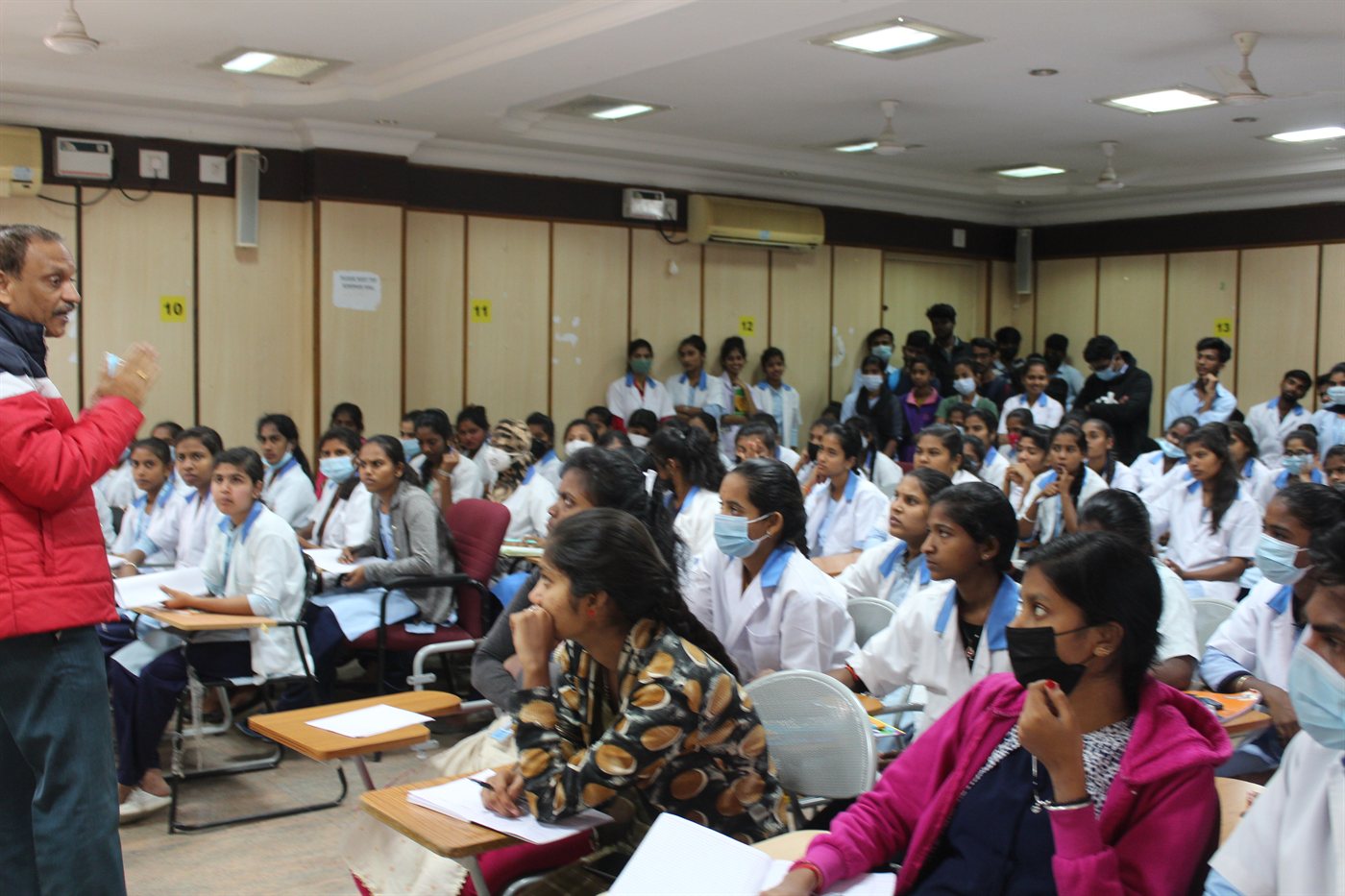
Technical Officer SJJ conducting an intensive clinical training session for municipal healthcare workers, explaining nerve assessment techniques and patient counseling methods.
W.H.O. Action Research & Community Health
A significant institutional milestone was SJJ's collaboration with the Bangalore City Corporation and the World Health Organization (W.H.O.) on Action Research studying the social determinants affecting Healthy urbanization [in 2007-08]. This rigorous field research demonstrated the direct link between rapid deterioration of community health and unsafe drinking water alongside inadequate environmental sanitation in informal urban settlements.
Drawing from these research findings, SJJ institutionalized ongoing mother & child healthcare, hygiene education, and environmental sanitation programs that continue to benefit over 1,800 children and women annually.
Two-Track Rehabilitation for Persons Affected by Leprosy
In Community-Based Rehabilitation (CBR) for persons affected by leprosy, SJJ implements a balanced two-track methodology:
- Track 1 — Individual Direct Assistance: Direct assistance for affected individuals through medical treatment, counselling, assistive aids and referral for specialist services and facilitation for education, vocational skill building, and sustainable livelihood opportunities to achieve personal self-reliance.
- Track 2 — Collective Action & Inclusion: Capacitating and strengthening the Caring Community Groups (CCGs) of persons affected by leprosy, their family and members of the community enabling them for collective actions to achieve better health outcomes.
Evolution: Expanding to Child Protection & End Bonded Labour System and Trafficking
Over the decades, SJJ applied its community trust and grassroots presence to address vulnerable children and structural exploitation in rural and peri-urban Karnataka:
- Child Protection (CHILDLINE 1098 & Statutory Leadership): SJJ served as the collaborative partner for the Ministry of Women and Child Development's CHILDLINE 1098 emergency toll-free service in Ramanagara district from March 2016 till the CHILDLINE 1098's services merged with the District Child Protection Unit [DCPU] of the Government in September 2023. SJJ also establishes Child Rights Clubs in schools to foster child-friendly environments. The founder Secretary of SJJ has served as a Member of the Juvenile Justice Board [2010 - 2016] and Chairperson of the Child Welfare Committee [2017-2024] under the Juvenile Justice [Care & Protection of Children] Act in Ramanagara and Bangalore urban district.
- End Bonded Labour System: Identifying bonded labour in brick kilns, stone quarries, and agricultural estates across Ramanagara, Kolar, Tumakuru, and Davanagere districts and reporting to the concerned authorities as provided in the Bonded Labour System [Abolition] Act 1976. Working with the District Administration, District Legal Services Authorities (DLSA), Police and other relevant departments for intervention to end bonded labour system.
- Anti-Human Trafficking & Multi-Stakeholder Training: Collaborating with the Zilla Panchayat, DLSA, Police, Department of Labour & Women & Child Development and Civil Society Organisations [CSOs] to conduct orientation and training workshops on the issues of trafficking and legal interventions and observe the World Day Against Trafficking in Persons.
- Socio-Economic Empowerment of Marginalized Women: Mobilizing women into Self-Help Groups (SHGs) across rural Ramanagara and urban Bengaluru settlements, offering certified vocational skill training in dressmaking and embroidery to ensure economic self-reliance.
Communities We Serve
SJJ's programs are strictly tailored to individuals and families who face compounding social barriers:
Persons Affected by Leprosy & Disabilities
Medical care, assistive devices, livelihood support, social inclusion and MDT coordination and capacity building.
Vulnerable Children & Youth
24/7 CHILDLINE 1098 emergency rescue, outreach and awareness, and Child Rights Clubs.
Rescued Survivors of Bonded Labourers
Facilitating rehabilitation and restoration services, accessing legal aid via DLSA, and livelihood rebuilding.
Marginalized Women & Mothers
Mother & child healthcare, vocational skill training and SHG micro-savings.
Leadership & Governance
Founded by professional social workers and para medical personnel, SJJ is guided by the Executive Council. Under its stewardship, the organization maintains direct, unmediated engagement on the ground in Karnataka, working in close collaboration with government health authorities, local municipal corporations and the concerned government departments.
The organization operates from its registered office in Shanthinagar / Adugodi, Bengaluru. All administrative, financial, and field documentation is maintained with rigorous transparency and is accessible to authorized institutional partners.
Documentary Media & Press Archives
Independent coverage of SJJ's field conventions, worker rescues, health camps, and government engagements published in leading Kannada newspapers (Prajavani, Kannada Prabha, Vijayavani).
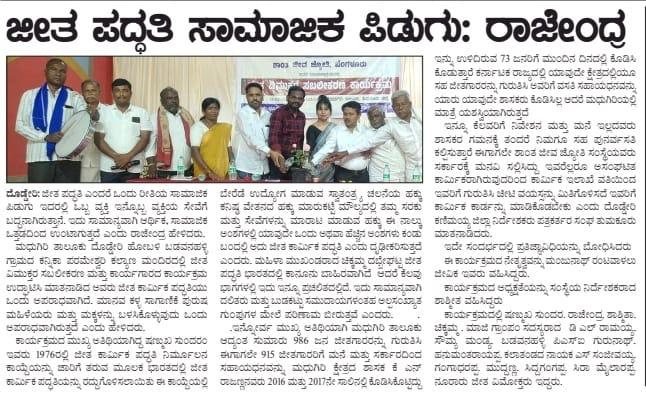
Madhugiri Survivors' Meet
Press reporting on convention of released bonded workers organizing for rehabilitation rights.
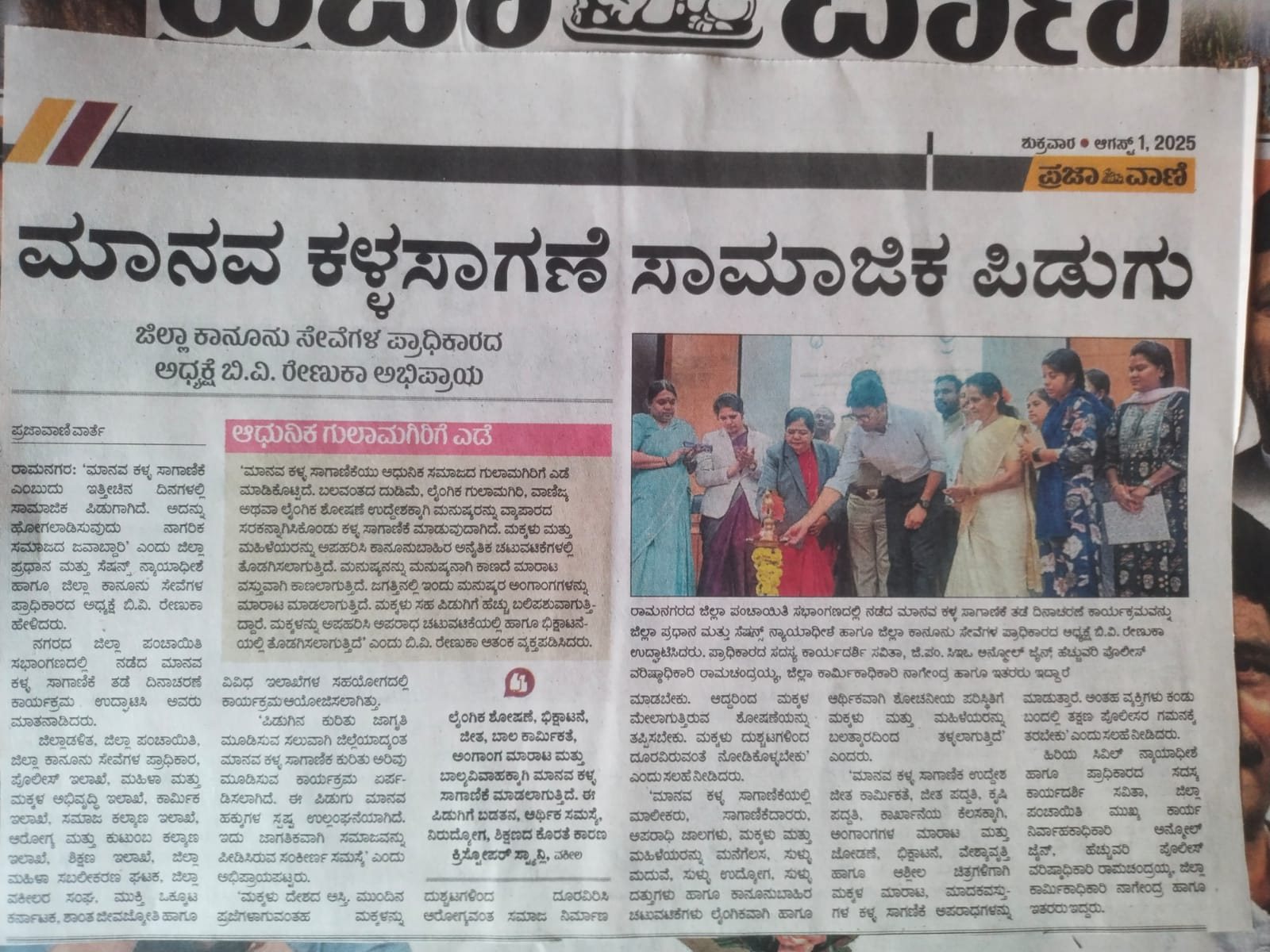
District Anti-Trafficking Day
Coverage of district level convention with principal sessions judges and police superintendents.
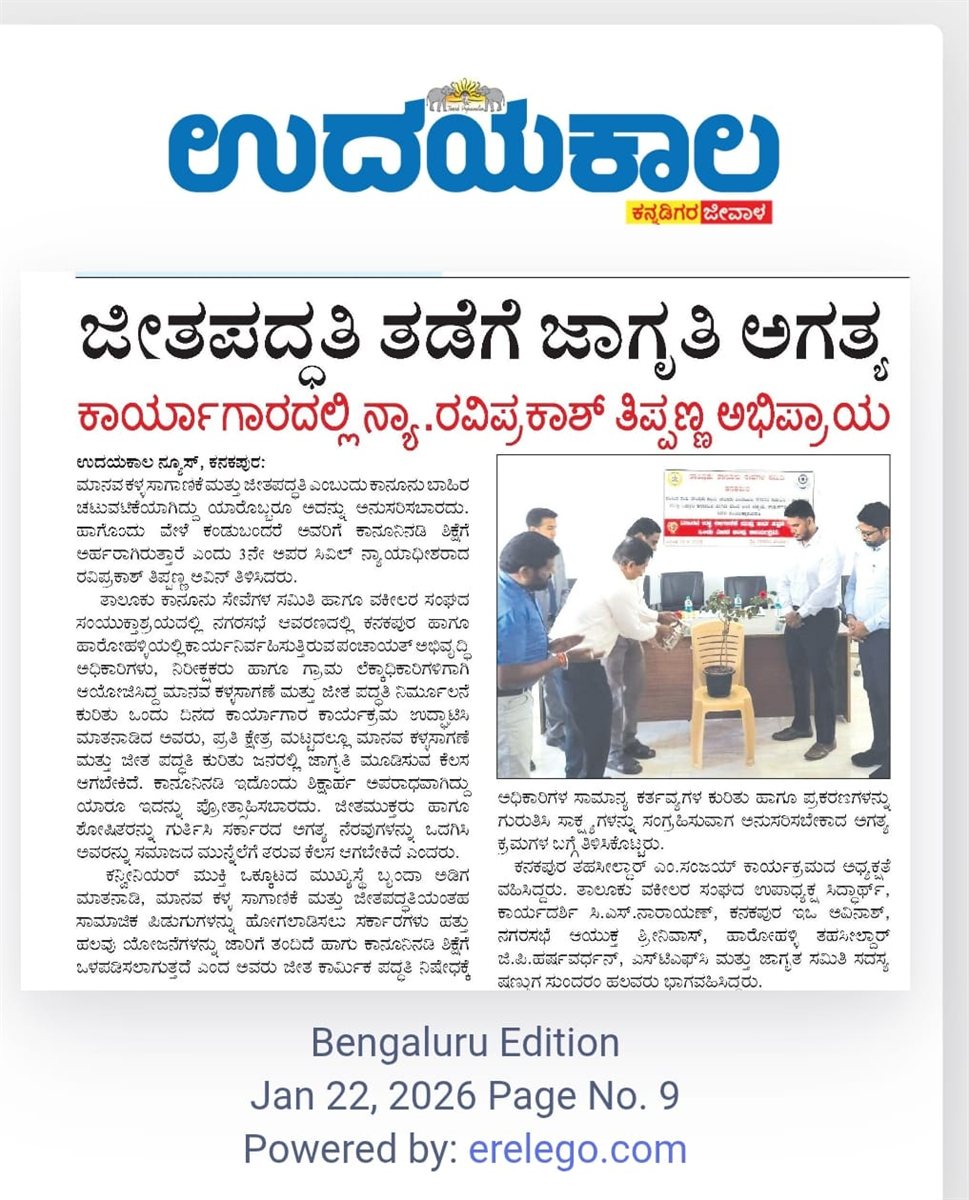
PDO Training Workshop
Kannada daily report on administrative training on the Bonded Labour Abolition Act.